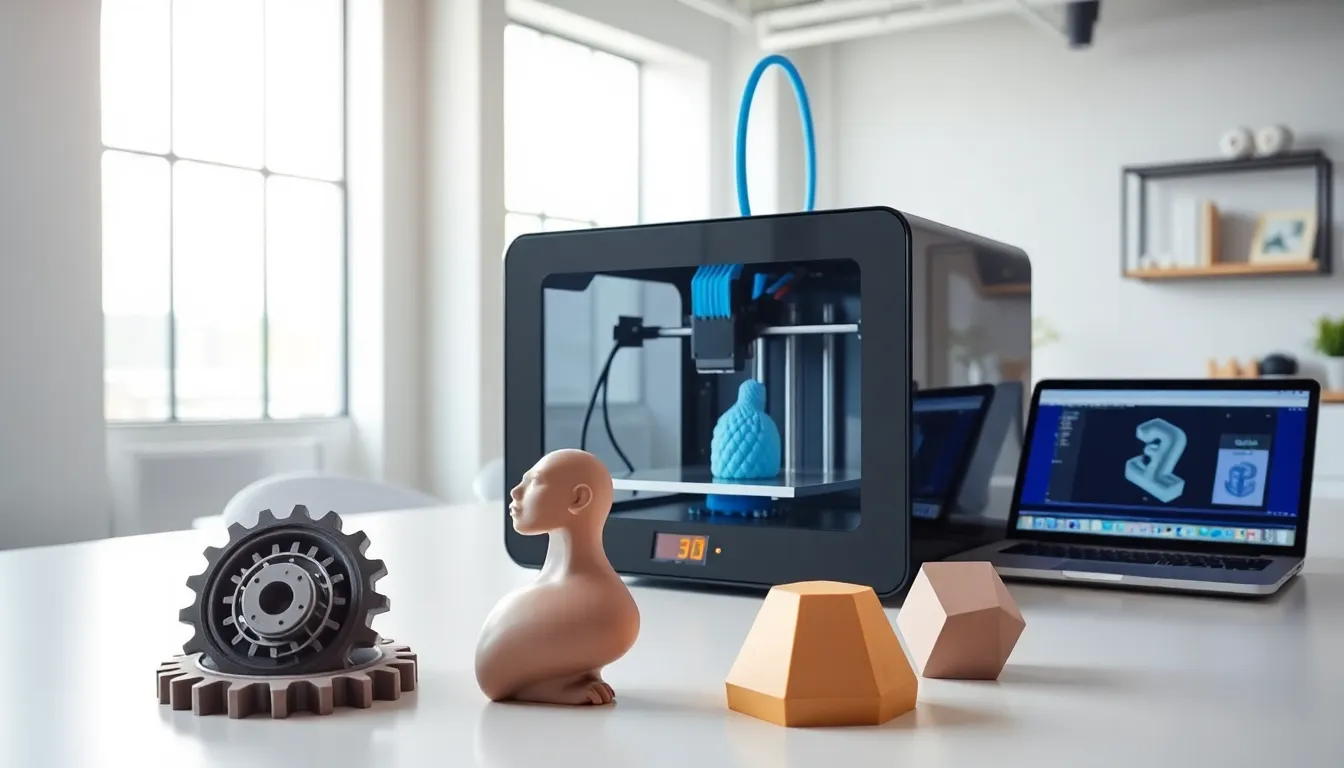
3D printing has changed how people create physical objects from digital designs. This technology builds items layer by layer, turning computer models into tangible products. From medical devices to custom toys, 3D printing serves countless purposes across industries and homes alike.
This guide explains how 3D printing works, explores the main technologies available, and highlights practical applications. Whether someone wants to start a 3D printing hobby or understand its industrial uses, this article covers the essentials.
Table of Contents
ToggleKey Takeaways
- 3D printing builds objects layer by layer from digital designs, making it useful for industries ranging from healthcare to aerospace.
- FDM (Fused Deposition Modeling) is the most popular and affordable 3D printing technology for home users, using materials like PLA and ABS.
- SLA and SLS 3D printing methods offer higher detail and stronger parts but come with increased costs and post-processing requirements.
- Getting started with 3D printing at home costs between $200 and $500 for entry-level printers like the Creality Ender 3 or Bambu Lab A1 Mini.
- Beginners should start with PLA filament and simple projects like calibration cubes before progressing to functional prints.
- Online communities and free slicing software like Cura and PrusaSlicer provide valuable support for new 3D printing enthusiasts.
How 3D Printing Works
3D printing, also called additive manufacturing, creates objects by depositing material in successive layers. The process starts with a digital 3D model, typically created using CAD (computer-aided design) software or downloaded from online repositories.
The basic workflow follows these steps:
- Design or Download: Users create a 3D model or obtain one from platforms like Thingiverse or MyMiniFactory.
- Slicing: Specialized software converts the 3D model into thin horizontal layers and generates instructions (G-code) for the printer.
- Printing: The 3D printer reads the G-code and deposits material layer by layer until the object is complete.
- Post-Processing: Depending on the technology used, the finished print may need cleaning, curing, or support removal.
Most consumer 3D printers use thermoplastic filaments. The printer heats this material until it melts, then extrudes it through a nozzle onto a build platform. Each layer bonds to the one below it as it cools.
Print quality depends on several factors: layer height, print speed, material type, and machine calibration. Thinner layers produce smoother surfaces but increase print time. A typical desktop 3D printer can achieve layer heights between 0.1mm and 0.3mm.
Common Types of 3D Printing Technologies
Several 3D printing technologies exist, each with distinct advantages. Understanding these options helps users choose the right approach for their projects.
Fused Deposition Modeling (FDM)
FDM remains the most popular 3D printing method for home users. It melts plastic filament and extrudes it through a heated nozzle. Common materials include PLA, ABS, and PETG. FDM printers are affordable, easy to use, and produce functional parts. But, they create visible layer lines and struggle with fine details.
Stereolithography (SLA)
SLA 3D printing uses a UV laser to cure liquid resin into solid layers. This technology produces highly detailed prints with smooth surfaces. Jewelry makers, dental labs, and miniature hobbyists prefer SLA for its precision. The trade-offs include higher material costs and mandatory post-processing steps like washing and UV curing.
Selective Laser Sintering (SLS)
SLS fuses powdered material using a high-powered laser. This 3D printing method works with nylon and other engineering-grade plastics. SLS creates strong, functional parts without support structures since the unsintered powder supports the object during printing. Industrial manufacturers rely on SLS for prototyping and end-use parts.
Multi Jet Fusion (MJF)
HP developed MJF technology for industrial 3D printing applications. It applies fusing agents to powder beds and uses infrared energy to bond particles. MJF delivers excellent surface quality and mechanical properties at faster speeds than SLS.
Popular Applications Across Industries
3D printing has moved far beyond prototyping. Today, this technology serves critical functions across diverse sectors.
Healthcare and Medical
Hospitals use 3D printing to create patient-specific surgical guides, custom prosthetics, and anatomical models for pre-operative planning. Dental clinics print aligners, crowns, and implant guides daily. Researchers are even developing bioprinting techniques to create living tissue structures.
Aerospace and Automotive
Aerospace companies like Boeing and Airbus incorporate 3D printed components into aircraft. These parts reduce weight while maintaining strength. Automotive manufacturers use 3D printing for rapid prototyping, tooling, and increasingly for production parts. The technology cuts development time from months to weeks.
Consumer Products
3D printing enables mass customization of consumer goods. Companies offer personalized phone cases, eyewear, and jewelry. Sporting goods manufacturers print custom-fit insoles and equipment components.
Architecture and Construction
Architects create detailed scale models using 3D printing. Some construction companies now experiment with large-scale 3D printers that build entire house structures from concrete mixtures. This approach promises faster construction and reduced material waste.
Education
Schools integrate 3D printing into STEM curricula. Students learn design thinking, engineering principles, and problem-solving by creating physical objects. The technology makes abstract concepts tangible and engaging.
Getting Started With 3D Printing at Home
Starting a 3D printing hobby has never been more accessible. Entry-level FDM printers cost between $200 and $500, delivering capable performance for beginners.
Choosing a First Printer
Popular beginner options include the Creality Ender 3 series, Bambu Lab A1 Mini, and Prusa Mini+. Look for printers with active user communities, available replacement parts, and good documentation. Pre-assembled printers reduce setup frustration, though kit builds teach valuable mechanical skills.
Essential Supplies
Beyond the printer itself, new users need:
- Filament: Start with PLA, it prints easily and doesn’t require a heated enclosure
- Bed adhesion aids: Glue sticks or painter’s tape help prints stick to the build plate
- Basic tools: Scrapers, flush cutters, and tweezers assist with print removal and cleanup
- Slicing software: Cura, PrusaSlicer, and Bambu Studio are free options
Learning Resources
Online communities provide tremendous support for 3D printing newcomers. Subreddits like r/3Dprinting and r/FixMyPrint help troubleshoot issues. YouTube channels offer tutorials on printer setup, calibration, and advanced techniques.
First Projects
Start with simple, forgiving prints. Calibration cubes test printer accuracy. Benchy boats reveal common printing problems. Once comfortable, users can progress to functional items like phone stands, organizers, or replacement parts for household items.