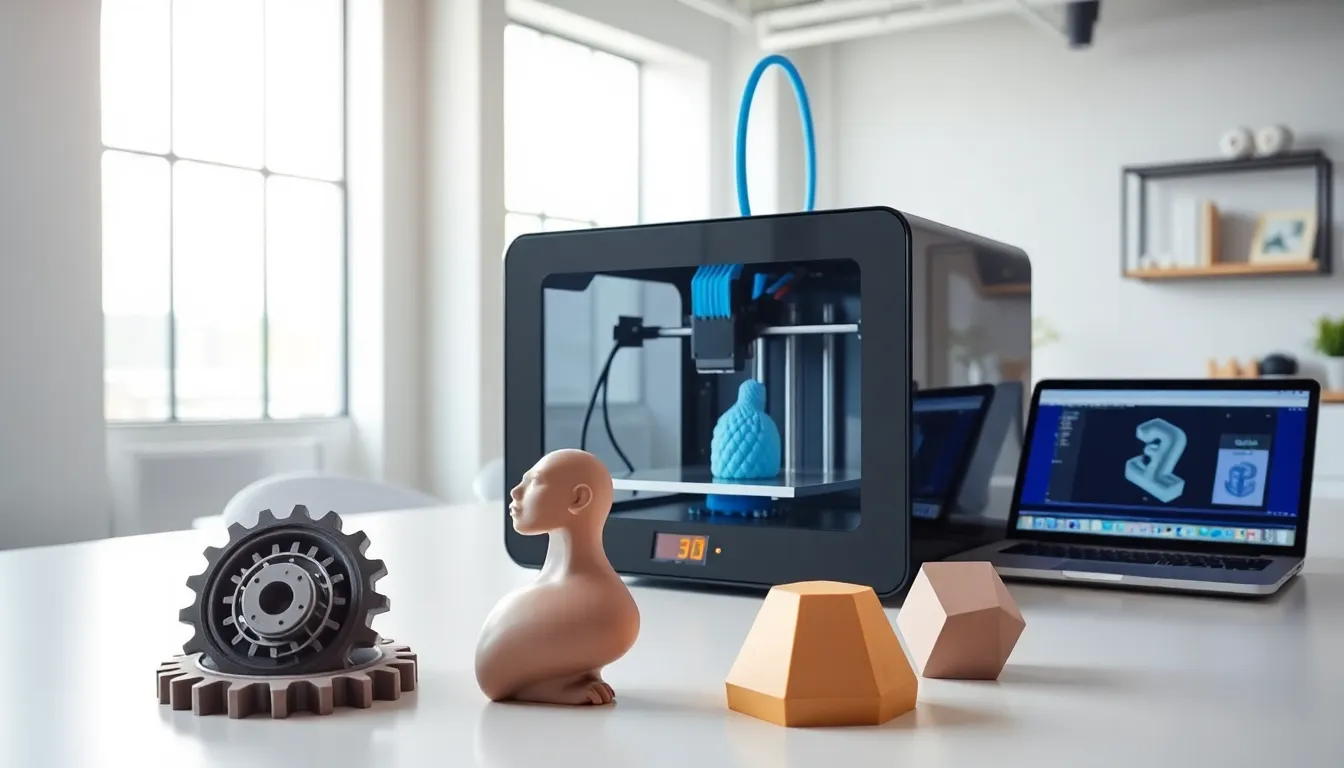
3D printing tools transform a basic printer into a complete workshop. Whether someone prints functional parts or artistic creations, the right accessories make the difference between frustration and success. A quality printer alone won’t produce professional results. Makers need preparation tools, finishing equipment, and maintenance supplies to get the best from their machines.
This guide covers the essential 3D printing tools that every maker should have on hand. From design software to safety gear, these items help users print better, maintain their equipment, and work more efficiently. Beginners and experienced printers alike will find practical recommendations to upgrade their setup.
Table of Contents
ToggleKey Takeaways
- Essential 3D printing tools include slicing software, digital calipers, and build surface upgrades to ensure successful prints from the start.
- Post-processing tools like flush cutters, sandpaper, and filler primer transform raw prints into polished, professional-quality pieces.
- Nozzle cleaning supplies and spare nozzles are critical 3D printing tools that prevent clogs and minimize printer downtime.
- Proper ventilation equipment and heat-resistant gloves protect makers from fumes and burns during printing and maintenance.
- Dry storage solutions with desiccant extend filament life by preventing moisture absorption.
- Organized workspaces with tool holders and labeled bins save time and reduce frustration during projects.
Preparation and Design Tools
Good prints start long before the filament touches the bed. Preparation and design tools set the foundation for every successful project.
Slicing Software
Slicing software converts 3D models into printer instructions. Popular options include Cura, PrusaSlicer, and Simplify3D. Each slicer offers different features, but all handle the critical task of generating G-code. Most 3D printing tools in this category are free. Beginners should start with Cura or PrusaSlicer, as both have active communities and solid documentation.
CAD Programs
Designers need CAD software to create original models. Fusion 360 works well for mechanical parts. TinkerCAD offers a simple entry point for newcomers. Blender handles organic shapes and artistic designs. The choice depends on the type of projects a maker pursues.
Digital Calipers
Accurate measurements matter in 3D printing. Digital calipers help users measure existing parts, check print dimensions, and verify tolerances. A decent pair costs around $20 and lasts for years. This is one of the most-used 3D printing tools in any workshop.
Build Surface Upgrades
The stock build plate works fine, but upgrades improve adhesion and part removal. PEI sheets offer excellent grip for most materials. Glass beds provide a smooth bottom finish. Magnetic flex plates let users pop prints off with a simple bend. These surfaces save time and reduce failed prints.
Post-Processing and Finishing Tools
Raw prints rarely look finished. Post-processing tools turn rough outputs into polished products.
Scrapers and Removal Tools
A good scraper gets prints off the bed without damage. Thin metal spatulas work for most jobs. Plastic scrapers prevent scratches on delicate surfaces. Some makers prefer specialized print removal tools with ergonomic handles. Having multiple sizes helps with different print footprints.
Flush Cutters and Snips
Flush cutters remove supports cleanly. They cut close to the surface without leaving large nubs. Quality cutters make quick work of support structures and stringing. Cheap versions dull fast, so spending a bit more pays off. These 3D printing tools see daily use in active workshops.
Sandpaper and Files
Sanding removes layer lines and surface imperfections. Start with 120-grit and work up to 400 or higher for smooth finishes. Needle files handle tight corners and small details. Sanding blocks keep surfaces flat. For large projects, a rotary tool speeds up the process.
Filler and Primer
Spot putty fills gaps and layer lines before painting. Filler primer creates a smooth base for final coats. XTC-3D and similar epoxy coatings provide a glossy, durable finish on larger prints. These products transform PLA and ABS into display-quality pieces.
Maintenance and Calibration Equipment
Printers need regular care. The right maintenance tools keep machines running accurately and reliably.
Nozzle Cleaning Supplies
Clogged nozzles ruin prints. Acupuncture needles or specialized cleaning filament clear blockages quickly. Brass wire brushes remove residue from the outside of nozzles. Cold pulls (also called atomic pulls) clean the inside of the hotend. Smart makers keep these 3D printing tools within arm’s reach.
Spare Nozzles
Nozzles wear out, especially with abrasive filaments. Brass nozzles work for standard materials. Hardened steel handles carbon fiber and glow-in-the-dark filaments. Ruby-tipped nozzles last longest but cost more. Keeping spares on hand prevents downtime when a nozzle fails.
Hex Keys and Screwdrivers
Printers use metric fasteners almost exclusively. A set of hex keys from 1.5mm to 6mm covers most machines. Ball-end versions reach awkward angles. A few precision screwdrivers handle electronics and small components. These basic 3D printing tools solve most mechanical issues.
Leveling and Calibration Aids
Bed leveling affects first-layer adhesion. Feeler gauges provide precise gap measurements. Calibration cubes and test prints reveal dimensional accuracy problems. A straight edge checks bed flatness. Proper calibration improves print quality across all projects.
Safety and Organization Accessories
Safe and organized workspaces make printing more enjoyable and productive.
Ventilation Equipment
Printing releases fumes and particles. An enclosure with a HEPA filter reduces exposure. Activated carbon filters remove odors from ABS and other smelly materials. Even a simple desk fan pointing toward a window helps. Makers who print frequently should invest in proper ventilation.
Heat-Resistant Gloves
Hotends and beds reach dangerous temperatures. Silicone or leather gloves protect hands during maintenance. They also provide grip when handling warm prints. A good pair prevents burns and adds confidence during repairs.
Storage Solutions
Filament absorbs moisture from the air. Dry boxes with desiccant keep spools ready to print. Vacuum bags work for long-term storage. Labeled bins organize small parts and tools. Good storage extends filament life and keeps the workspace functional.
Tool Holders and Organizers
Scattered tools waste time. Pegboards, magnetic strips, and drawer organizers keep 3D printing tools accessible. Some makers design and print their own holders. A tidy workspace reduces frustration and speeds up projects.