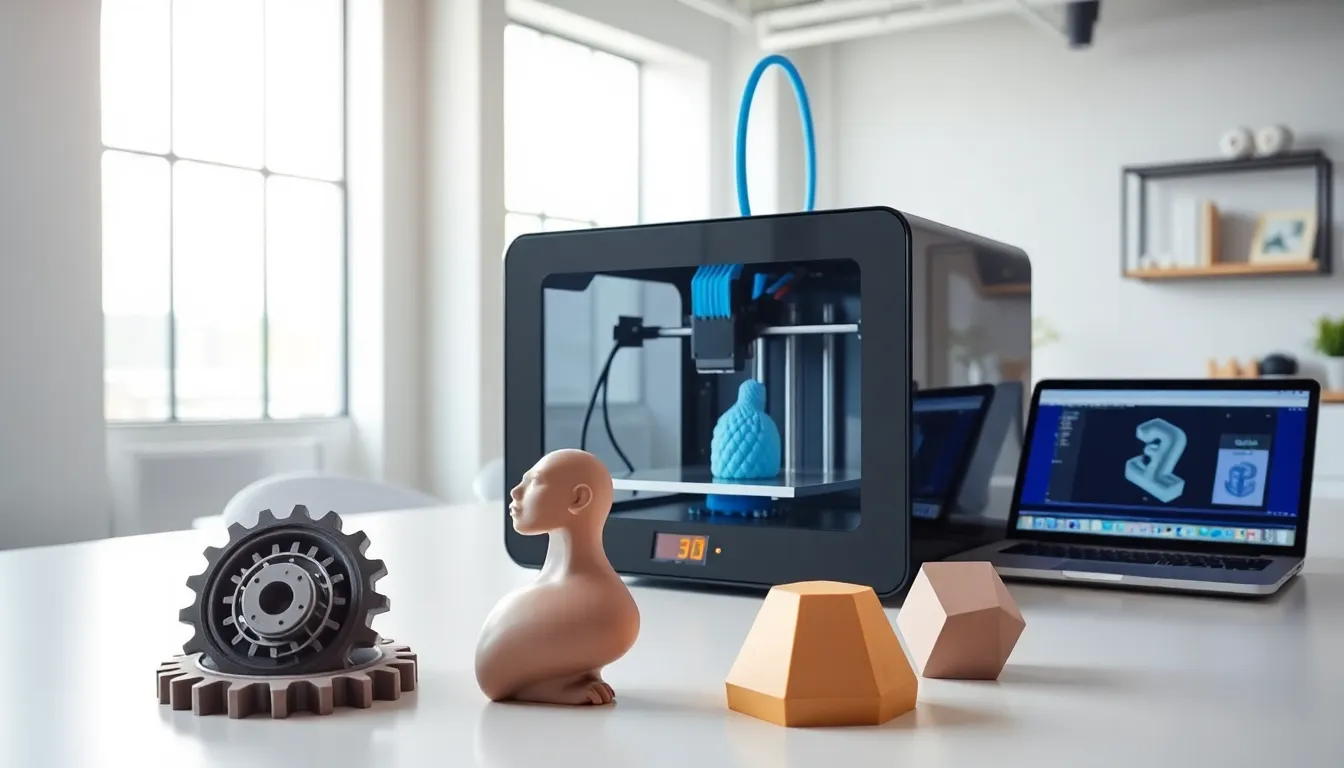
3D printing techniques have transformed how manufacturers, hobbyists, and engineers create physical objects. From desktop prototypes to industrial-grade components, these methods offer distinct advantages depending on the project’s requirements.
This guide breaks down the most popular 3D printing techniques available today. Readers will learn how each method works, what materials it uses, and which applications suit it best. Whether someone is choosing their first printer or scaling up production, understanding these differences matters.
Table of Contents
ToggleKey Takeaways
- FDM is the most affordable and widely used 3D printing technique, ideal for prototyping and functional parts with budgets starting under $200.
- SLA and resin-based 3D printing techniques deliver the smoothest surfaces and finest details, making them perfect for jewelry, dental models, and precision engineering.
- SLS produces the strongest parts among common 3D printing techniques, rivaling injection-molded plastic without requiring support structures.
- Each technique has trade-offs: FDM sacrifices surface finish for cost, SLA requires more post-processing, and SLS demands higher upfront investment.
- Many businesses combine multiple 3D printing techniques—prototyping with FDM, creating visual models with SLA, and manufacturing end-use parts with SLS.
Fused Deposition Modeling (FDM)
Fused Deposition Modeling, or FDM, remains the most widely used 3D printing technique. It works by heating thermoplastic filament and extruding it layer by layer through a nozzle. The material cools and hardens almost immediately, building the object from bottom to top.
FDM printers use materials like PLA, ABS, PETG, and nylon. PLA offers ease of use and biodegradability. ABS provides better heat resistance and durability. PETG balances strength with flexibility. Nylon suits applications requiring impact resistance.
Advantages of FDM
This 3D printing technique offers several clear benefits:
- Low cost: Entry-level FDM printers start under $200
- Material variety: Dozens of filament types exist for different needs
- Large build volumes: Many machines can print objects over 12 inches tall
- Simple maintenance: Users can replace nozzles and other parts easily
Limitations to Consider
FDM does have drawbacks. Layer lines remain visible on finished parts. Fine details often lack sharpness compared to resin-based 3D printing techniques. Print speed tends to be slower for high-quality results.
Hobbyists, educators, and product developers favor FDM for prototyping and functional parts. It’s the go-to choice when cost efficiency matters more than surface finish.
Stereolithography (SLA) and Resin Printing
Stereolithography, known as SLA, was the first 3D printing technique ever invented. Charles Hull patented it in 1986. The process uses a UV laser to cure liquid photopolymer resin, hardening it one layer at a time.
Modern resin printers include two main variations: SLA and MSLA (masked stereolithography). SLA uses a single laser point. MSLA uses an LCD screen to cure entire layers simultaneously, making it faster for most prints.
How Resin Printing Differs
Resin-based 3D printing techniques produce remarkably smooth surfaces. Layer heights can reach 25 microns, roughly one-third the width of a human hair. This precision makes SLA ideal for:
- Jewelry and dental models
- Miniatures and figurines
- Engineering prototypes with tight tolerances
- Medical devices and anatomical models
Material Options
Standard resins work well for display models. Engineering resins offer heat resistance and mechanical strength. Flexible resins create rubber-like parts. Castable resins burn out cleanly for investment casting.
Trade-offs with Resin
Resin printing requires more post-processing. Parts need washing in isopropyl alcohol and additional UV curing. The liquid resin itself requires careful handling, it’s toxic before curing. Build volumes also tend to be smaller than FDM machines at similar price points.
Even though these factors, SLA remains a top 3D printing technique when surface quality and precision take priority.
Selective Laser Sintering (SLS)
Selective Laser Sintering uses a high-powered laser to fuse powdered material into solid structures. Unlike FDM or SLA, SLS doesn’t require support structures. The unfused powder surrounding each layer holds the part in place during printing.
This 3D printing technique primarily uses nylon (PA12 and PA11) as its base material. Some systems also process TPU for flexible parts, glass-filled nylon for stiffness, or even metal powders in related DMLS systems.
Why Professionals Choose SLS
SLS produces parts with excellent mechanical properties. The laser-sintered nylon rivals injection-molded plastic in strength. Parts come out with consistent density throughout, no hollow infill patterns like FDM.
Key applications include:
- Functional end-use parts
- Low-volume production runs (100-10,000 units)
- Aerospace and automotive components
- Complex geometries impossible to mold traditionally
Cost Considerations
Industrial SLS machines cost $100,000 or more. Desktop versions have emerged around $10,000, making this 3D printing technique more accessible than before. Material costs run higher than FDM filament but lower than many specialized resins.
The powder bed approach also reduces waste. Unfused powder can be recycled for future prints, typically at a 50/50 ratio with fresh material.
SLS fits businesses that need production-quality parts without investing in injection mold tooling. The per-unit cost makes sense when quantities stay below traditional manufacturing thresholds.
Comparing Techniques for Different Applications
Choosing the right 3D printing technique depends on specific project needs. Each method excels in different scenarios.
| Factor | FDM | SLA/Resin | SLS |
|---|---|---|---|
| Surface finish | Visible layers | Very smooth | Slightly textured |
| Strength | Good | Moderate | Excellent |
| Detail resolution | Low-medium | High | Medium-high |
| Material cost | Low | Medium | Medium-high |
| Machine cost | $200-$5,000 | $200-$10,000 | $10,000-$500,000 |
| Best for | Prototypes, large parts | Visual models, precision | Functional parts, production |
Quick Decision Guide
Choose FDM when:
- Budget is limited
- Parts need to be large
- Mechanical function matters more than appearance
Choose SLA when:
- Fine details are critical
- Smooth surfaces are required
- Accuracy must be within 0.1mm
Choose SLS when:
- Parts must perform like injection-molded plastic
- Complex internal geometries exist
- Production quantities reach dozens or hundreds
Many businesses use multiple 3D printing techniques. They prototype with FDM, create presentation models with SLA, and manufacture end-use parts with SLS. This hybrid approach maximizes the strengths of each method.